
PRIVACY AND SECURITY POLICY
CONTACT FORM
In accordance with the provisions of both Regulation (EU) 2016/679 of the European Parliament and of the Council of April 27, 2016, on the protection of natural persons with regard to the processing of personal data and on the free movement of such data (GDPR), as well as Organic Law 3/2018 of December 5 on the Protection of Personal Data and the Guarantee of Digital Rights (LOPD-GDD) and other applicable data protection regulations, users who have voluntarily given their free, clear, and unambiguous consent by filling out the contact form are hereby informed that their data will be processed by the company CUSTOMER COMMUNICATIONS TECKNALIA, S.L.
CUSTOMER COMMUNICATIONS TECKNALIA, S.L. respects your privacy and is committed to protecting your personal data. This privacy policy explains how we protect your personal data when you visit our website (from any location) and outlines your privacy rights as protected by law.
In this Policy, we explain how we collect and use the personal information you provide, and we implement the appropriate data controls in accordance with the provisions of Regulation (EU) 2016/679 of the European Parliament and of the Council of April 27, 2016, on the protection of natural persons with regard to the processing of personal data and on the free movement of such data, and repealing Directive 95/46/EC (“GDPR”), as well as Organic Law 3/2018 of December 5 on the Protection of Personal Data and the Guarantee of Digital Rights (“LOPDGDD”), and other applicable data protection regulations.
Throughout this text, you will find information on how to contact us if you have any questions regarding privacy and data protection:
Responsible Party: CUSTOMER COMMUNICATIONS TECKNALIA, S.L.
Identity: CUSTOMER COMMUNICATIONS TECKNALIA, S.L.
Tax ID: B-86414000
Address: Avenida de la Recomba No. 14 – 28914 – Leganés, Madrid
Phone: +34 916895665
DPO Contact: dpo@customercomms.com
Purpose: Management, processing, and access to the restricted area for the contracted services.
- Web User Data:
This data will be processed solely for statistical and browsing analysis purposes, to optimize and improve the user experience, all in accordance with the provisions of our Cookie Policy. In any case, these are non-intrusive analyses that enable us to improve our services and the technology used to deliver them.
- Data collected through the registration form:
The data will be processed for the purpose of managing and facilitating access to the restricted area and to the services.
CUSTOMER COMMS will process the data provided only for the purposes described above and will not process it further in a manner incompatible with those purposes.
The personal data provided will be retained for the legally required periods applicable in each case, taking into account the type of data and the purpose of the processing, provided that the user has not exercised their right to erasure.
No automated decisions will be made based on that profile.
Legal Basis: Consent of the data subject. Legitimate interest.
- Web User Data:
Legitimate interest, consisting of the continuous improvement of the business model offered on the website, as well as the correction of any deficiencies that may be detected in the delivery of the service.
- Data collected through the contact form:
Consent of the data subject by directly providing their data through the contact form provided.
Recipients: Potential customers. Government agencies. Legal requirement.
- Government agencies and authorities, for the sole purpose of fulfilling our obligations and preventing misuse of services or fraudulent activities in connection with the services provided through our Website.
- As required by law.
Rights: You may exercise your rights of access, rectification, restriction, objection to processing, and data portability, in accordance with current regulations.
- General Confirmation: Any person has the right to obtain confirmation as to whether CUSTOMER COMMS is processing personal data concerning them.
- ARCO Rights: Data subjects have the right to access their personal data, as well as to request the correction of inaccurate data or, where applicable, to request its deletion when, among other reasons, the data is no longer necessary for the purposes for which it was collected.
- Restriction of Processing: Under certain circumstances, data subjects may request that the processing of their data be restricted; in such cases, we will retain their data solely for the purpose of asserting or defending legal claims.
- Objection to Processing: Under certain circumstances and for reasons related to their specific situation, data subjects may object to the processing of their data.
- Data Portability: Under certain circumstances and for reasons related to their specific situation, data subjects may request to receive the personal data provided in the contact form in a structured, commonly used, and machine-readable format, as well as to transmit such data to another data controller without hindrance.
- Complaint with the Spanish Data Protection Agency: If you believe your right to personal data protection has been violated, you may file a complaint with the Spanish Data Protection Agency (www.aepd.es).
Additional information: You can find more information in our Privacy Policy.
- The personal data we process at CUSTOMER COMMS has been provided to us directly by the data subject by filling out the registration form provided.
- The categories of data to be processed are identifying data: first and last names, company, corporate email address, and password.
- CUSTOMER COMMS does not process specially protected data.
Security and Privacy Policy: Policy on the Information Security, Business Continuity, and Privacy Management System
POLICY ON THE INFORMATION SECURITY, CONTINUITY, AND PRIVACY MANAGEMENT SYSTEM
This Information Security, Continuity, and Privacy Policy demonstrates management’s commitment to providing the organization with the resources, responsibilities, and procedures necessary to ensure compliance with current regulations, as well as the integrity, confidentiality, and availability of information and systems—all of which are crucial to the security, privacy, and continuity of our organization and that of our clients.
CUSTOMER COMMS, recognizing that the security, continuity, and privacy of our customers’ information are highly valuable assets, has established a Security, Information Security, Continuity, and Privacy Management System in accordance with the requirements of the ISO/IEC 27001, ISO/IEC 27701, and ISO 22301 standards to ensure the continuity of information systems, minimize the risks of damage, and ensure compliance with established objectives.
In addition, for the Certified Electronic Delivery service, given the nature of the service itself, we have followed the provisions set forth in the European eIDAS Regulation governing Trust Services, and specifically the ETSI 319 401 and ETSI 319 521 standards for Certified Electronic Delivery Service Providers, which contain specific requirements for the provision of this type of service. In this regard, the policy governing this service will be the Statement of Practices for the Certified Electronic Delivery Trust Service (hereinafter “DPC”).
Furthermore, in compliance with European cybersecurity regulations, the entities that are part of the Group, in their capacity as Qualified Trust Service Providers, commit to complying with Directive (EU) 2022/2555 on measures to ensure a common high level of cybersecurity throughout the Union, as critical entities of the European digital infrastructure.
The objective of the Security, Continuity, and Privacy Policy is to establish the necessary framework for protecting information resources against threats—whether internal or external, deliberate or accidental—in order to ensure the confidentiality, integrity, and availability of information.
The effectiveness and implementation of the Information Security, Continuity, and Privacy Management System are the direct responsibility of the Information Security and Privacy Committee, which is responsible for the approval, dissemination, and enforcement of this Security, Continuity, and Privacy Policy. An Information Security and Privacy Management System Officer has been appointed on its behalf and in its name, who possesses sufficient authority to play an active role in the Information Security and Privacy Management System, overseeing its implementation, development, and maintenance.
In addition, and to comply with current data protection regulations, a Data Protection Officer (DPO) has been appointed to ensure the security and privacy of personal data, particularly given the nature of the company’s activities.
The Information Security and Privacy Committee will develop and approve the risk analysis methodology used in the Information Security, Continuity, and Privacy Management System.
Any person whose activities may be directly or indirectly affected by the requirements of the Information Security, Continuity, and Privacy Management System is required to strictly comply with the Security, Continuity, and Privacy Policy and, additionally, for the Certified Electronic Delivery Service, must comply with the DPC.
CUSTOMER COMMS will implement all necessary measures to comply with applicable regulations regarding security, business continuity, and privacy in general, as well as information security—including IT policy, the security of buildings and facilities, and the conduct of employees and third parties associated with CUSTOMER COMMS in the use of IT systems and the processing of personal data. The measures necessary to ensure the security and privacy of information through the application of standards, procedures, and controls must guarantee the confidentiality, integrity, and availability of the information, which are essential for:
- Comply with current laws, regulations, and standards regarding business continuity, privacy, and information systems, as well as all contractual requirements related to data protection and trusted electronic services, as well as any other measures deemed appropriate to achieve continuous improvement of the organization and its security, business continuity, and privacy management system.
- Ensure the confidentiality of the data managed by CUSTOMER COMMS
- Ensure the availability of information systems, both in the services offered to customers and in internal management.
- Ensure the ability to respond to emergency situations, restoring the operation of critical services as quickly as possible.
- Prevent unauthorized alterations to information.
- Promote awareness and training regarding information security, continuity, and privacy, as well as trusted electronic services.
- Promote and participate in achieving continuous improvement of the management system for information security, continuity, and privacy, as well as trusted electronic services.
- Establish technical and methodological requirements for cybersecurity risk management measures, identifying risks and addressing detected vulnerabilities, cyber threats, and cybersecurity incidents, in order to prevent incidents that could compromise CUSTOMER COMMS’ business continuity.
- Update the results of the risk assessment and the risk treatment plan at scheduled intervals and at least once a year, as well as whenever significant changes occur in operations or significant risks or incidents arise.
The Information Security and Privacy Policies and the DPC must be reviewed at scheduled intervals—at least annually and whenever significant changes occur within the organization—to ensure that they remain appropriate, adequate, and effective.
Network and Information Systems Security Policy
The management of CUSTOMER COMMS, recognizing the need to promote, maintain, and improve its customer-focused approach in all its activities, has implemented an Integrated Management System (IMS) in accordance with several internationally recognized standards. The ultimate goal of the IMS is to ensure that we understand and share our customers’ needs and goals, striving to provide services that meet their expectations and working toward continuous improvement. CUSTOMER COMMS expressly states its commitment to strengthening Information Security and Cybersecurity, specifically, to guarantee—among other things—the security of the networks and information systems that support our various business processes in a way that strengthens our digital operational resilience, as well as the continuity and availability of the services we provide, by aligning our practices with applicable regulations.
In this regard, CUSTOMER COMMS is committed to developing the highest level of cybersecurity capabilities, thereby reducing threats to the network and information systems used by CUSTOMER COMMS in accordance with European cybersecurity regulations.
At the same time, it commits to meeting the needs and expectations of stakeholders and to maintaining a high level of competitiveness in its services and products for the “automated processing of multichannel communications and transactions with customers, Issuance of documents in electronic and paper formats, as well as electronic certification of security documents and trust services: Qualified Service for Certified Electronic Delivery, Electronic Contracting and Signing; Electronic and Postal Notifications and Communications; Electronic Identification and Authentication; and Digital Archiving.”
THE ROLE OF CUSTOMER COMMS IN RELATION TO DIRECTIVE (EU) 2022/2555
CUSTOMER COMMS, in its capacity as a Qualified Trust Service Provider, are considered critical entities of the European digital infrastructure in accordance with Directive (EU) 2022/2555 on measures to ensure a high common level of cybersecurity across the Union, commonly referred to as the “NIS 2 Directive,” which means they are subject to its requirements.
For this reason, this Policy is an integral part of CUSTOMER COMMS’ security strategy, with the aim of ensuring that the use of networks and information systems respects the rights of stakeholders and upholds the highest cybersecurity standards, taking into account the Group’s activities and structure.
Consequently, CUSTOMER COMMS will be responsible for complying with the obligations set forth in this regulation.
MISSION AND OBJECTIVES:
- Promote continuous improvement in customer service and support.
- Continue to position CUSTOMER COMMS as a leader in the industry.
- Implement, maintain, and test our business continuity mechanisms to ensure that critical information and services are available to our customers when needed.
- Provide customers with the most professional team and ensure that highly qualified technicians—who are experts in the required disciplines and accustomed to working as a team—are immediately available for as long as necessary.
- Provide the appropriate resources necessary to implement this Policy, including the personnel, financial resources, processes, tools, and technologies required.
- To deliver services based on our commitment to the continuous improvement of our systems, with security, cybersecurity, and business continuity as central pillars.
- To foster and promote a culture of cybersecurity among all its professionals and parties subject to this Policy, whether internally or among its customers and suppliers.
- Implement a culture of information security through training and awareness-raising.
We will achieve our mission and objectives by:
- A system of objectives, metrics, and indicators for continuous improvement, monitoring, and measuring our internal processes, as well as our customers’ satisfaction. Establishing and overseeing compliance with contractual requirements to ensure an effective and secure service.
- Integrating indicators related to the level of implementation and maturity of security measures into the ISMS metrics system.
- Continuously training and raising awareness among our team to achieve the highest possible level of professionalism and expertise.
- Maintaining our infrastructure in proper condition and in accordance with our customers’ requirements.
- Organization and implementation of security processes.
- Personnel management.
- Access authorization and control.
- Security by design.
- System integrity and updates.
- Protection of information at rest and in transit.
- Prevention measures regarding other interconnected information systems.
- Implementing a secure procedure for managing product procurement.
- In compliance with the requirements of current legislation, particularly regarding the protection of personal data: the GDPR and the LOPDGDD.
- Complying with the policies and procedures defined in our Security Documentation.
- Implementing continuous improvement processes that enable ongoing progress in our information security management.
- Managing and developing plans for risk management and mitigation using a standards-based risk analysis and management methodology.
- Securely managing internal and external communications, as well as information stored and in transit.
- Ensuring interoperability with other information systems.
- Managing and monitoring activity through log management.
- Managing daily measures aimed at the protection and security of networks and information systems, designing robust security measures aligned with the needs of the various stakeholders, as well as with applicable regulations in this area; to this end, CUSTOMER COMMS approves the specific policies and/or procedures that implement the basic principles and security requirements for networks and information systems set forth in this Policy. The objective is to identify risks and address detected vulnerabilities, cyber threats, and cybersecurity incidents in order to prevent incidents that could compromise CUSTOMER COMMS’ business continuity.
- Defining policies and procedures for managing security incidents.
- Ensuring the continuity and availability of the business and its services.
- Ensuring that our Assets and Services comply with the HIGH-LEVEL ENS measures for the dimensions of Confidentiality, Integrity, Availability, Authenticity, and Traceability.
- Establishing, implementing, and enforcing supply chain security procedures and/or policies that govern relationships with direct suppliers and service providers and establish appropriate measures and controls to mitigate the identified risks posed by these third parties to the security of the Group’s networks and information systems.
In addition, these principles must be taken into account in the following areas of security:
- Physical: Including the security of premises, facilities, hardware systems, media, and any physical assets that process or may process information, as well as physical access.
- Logical: Including aspects of protection for applications, networks, electronic communications, computer systems, and logical access.
- Corporate and Policy: Consisting of security aspects related to the organization itself, internal policies, regulations, and legal requirements.
The ultimate goal of information security is to ensure that an organization can achieve its objectives by using information systems. The following basic principles must be taken into account when making security decisions:
- Organization and implementation of the security process.
- Risk analysis and management.
- Personnel management.
- Professionalism.
- Access authorization and control.
- Protection of facilities.
- Procurement of security products and contracting of security services.
- Least privilege.
- System integrity and updates.
- Protection of information at rest and in transit.
- Prevention measures regarding other interconnected information systems.
- Activity logging and detection of malicious code.
- Security incidents.
- Business continuity.
- Continuous improvement of the security process.
All cybersecurity documentation developed in accordance with the requirements set forth in this section is managed, structured, and retained in accordance with the documented procedures that CUSTOMER COMMS has developed, taking into account the applicable national and international technical standards and regulations in each case. A minimum retention period of 5 years has been established for the regulatory framework and the evidence supporting compliance with it in the area of cybersecurity. Within the framework of the Qualified Electronic Delivery Service, the Statements of Practice (DPCs) and the Final Service Statement will be retained for 15 years.
Security Roles or Functions within the ENS Framework:
Information Officer: will determine the (security) requirements for the information processed, in accordance with the parameters set forth in Annex I of the ENS.
- He or she bears ultimate responsibility for the use of the information and, therefore, for its protection. He or she is ultimately responsible for any error or negligence that results in an incident involving confidentiality or integrity (in terms of data protection) and availability (in terms of information security).
System Administrator: Determines the requirements for the services provided.
- The System Administrator has the following responsibilities:
- Develop, operate, and maintain the information system throughout its entire lifecycle, including its specifications, installation, and verification of proper operation.
- Define the topology and management of the information system, establishing the criteria for its use and the services available within it.
- Ensure that security measures are properly integrated into the overall security framework.
Information Security Officer: Makes decisions to meet the information security and service requirements.
- The two essential functions of the Security Officer are:
- To maintain the security of the information handled and the services provided by the information systems within their area of responsibility, in accordance with the provisions of the organization’s Information Security Policy.
- To promote training and awareness regarding information security within their area of responsibility.
Service Manager: Determines the (security) requirements for the services provided, in accordance with the parameters set forth in Annex I of the National Security Framework (ENS).
- Has the authority to establish the security requirements for the service. The determination of levels in each security dimension is carried out within the framework established in Annex I of the National Security Framework, with the assessment criteria supported by the Security Policy.
The Information Security and Privacy Committee (CSPI) of CUSTOMER COMMS is responsible for regulating and establishing procedures for information security and privacy measures and policies, as well as for regulations aimed at bringing information systems into compliance with current personal data protection laws.Among its functions are the following:
- Appoint the SGSPI Manager and approve his or her duties.
- Approve the start of the SGSPI implementation.
- Review and approve the Security and Privacy Policy.
- Approve the Information Security and Privacy System Documentation, as well as any new editions or modifications.
- Monitor the implementation and operation of the Information Security and Privacy System.
- Analyze complaints raised by customers.
- Periodically assess the level of exposure to risks affecting CUSTOMER COMMS’ information systems and personal data processing.
The CSPI consists of:
- Chief Executive Officer.
- Chief Technology Officer.
- Director of IT Operations.
- Director of Printing Operations.
- Chief Financial, Human Resources, and Legal Officer.
- Sales Director.
- Technical Director.
- Marketing Director.
- Director of International Markets.
- Head of the SGSPI.
In light of these guidelines, management reaffirms its firm commitment to joining forces to achieve these objectives, ensuring that this policy is understood, implemented, and kept up to date at all levels of the organization.
Structure of the System Security Documentation
The system documentation follows the structure below:
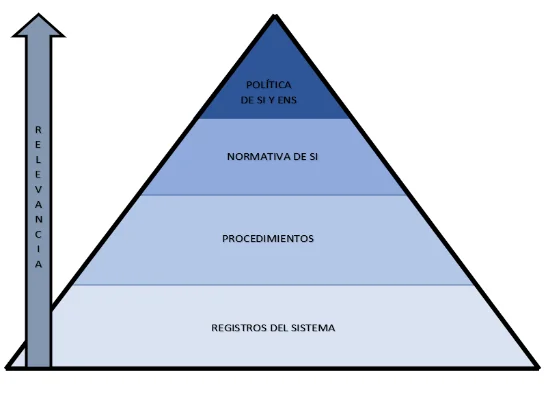
The classification of information in the system is divided into the following categories, as established in procedure PE-SGSPI 01-ERDS_Preparation and Control of Documentation:
- Public Use
- Internal Use
- Confidential
Applicable Legislation Regarding the Processing of Personal Data
With regard to the processing of personal data, the primary legislation to be taken into account is Regulation (EU) 2016/679 of the European Parliament and of the Council of April 27, 2016, on the protection of natural persons with regard to the processing of personal data and on the free movement of such data, and repealing Directive 95/46/EC, as well as the corresponding national legislation.
The applicable legal and regulatory framework is set forth in document RE01-PE_SGSPI18, “Applicable Regulations and Legislation.”
Monitoring, Approval, Publication, and Review
The CSPI must approve the organization’s Security, Cybersecurity, Business Continuity, and Privacy Policies, publish them, and/or distribute them to all employees, as well as to third parties who may be involved in the implementation of information systems.
The person in charge of the SGSPI, and the person in charge of the corresponding service—with regard to policies specific to each service—shall be responsible for making them public or, as appropriate, communicating them and ensuring they are always maintained in the CUSTOMER COMMS systems.
The Policies for Information Security, Cybersecurity, Business Continuity, and Privacy, as well as the specific policies for each service, must be reviewed at scheduled intervals—at least annually and whenever significant changes occur within the organization—to ensure that they remain appropriate, adequate, and effective.
The list of policies applicable within the framework of the ENS and SGSPI-ERDS can be found in the document “RE01-PE SGSPI-ERDS 01 List of SGSPI-ERDS Documents and Records.”
Additionally, the list of policies applicable within the framework of ERDS:
- Customer Comms’ Statement of Practices for the Certified Electronic Delivery Trust Service.
REGISTRATION FORM
In accordance with the provisions of both Regulation (EU) 2016/679 of the European Parliament and of the Council of April 27, 2016, on the protection of natural persons with regard to the processing of personal data and on the free movement of such data (GDPR), as well as Organic Law 3/2018 of December 5 on the Protection of Personal Data and the Guarantee of Digital Rights (LOPD-GDD) and other applicable data protection regulations, users who have voluntarily given their free, clear, and unambiguous consent by filling out the registration form are hereby informed that their data will be processed by the company CUSTOMER COMMUNICATIONS TECKNALIA, S.L.
CUSTOMER COMMUNICATIONS TECKNALIA, S.L. respects your privacy and is committed to protecting your personal data. This privacy policy explains how we protect your personal data when you visit our website (from any location) and outlines your privacy rights as protected by law.
In this Policy, we explain how we collect and use the personal information you provide, and we implement the appropriate data controls in accordance with the provisions of Regulation (EU) 2016/679 of the European Parliament and of the Council of April 27, 2016, on the protection of natural persons with regard to the processing of personal data and on the free movement of such data, and repealing Directive 95/46/EC (“GDPR”), as well as Organic Law 3/2018 of December 5 on the Protection of Personal Data and the Guarantee of Digital Rights (“LOPDGDD”), and other applicable data protection regulations.
Throughout this text, you will find information on how to contact us if you have any questions regarding privacy and data protection:
Responsible Party: CUSTOMER COMMUNICATIONS TECKNALIA, S.L.
Identity: CUSTOMER COMMUNICATIONS TECKNALIA, S.L.
Tax ID: B-86414000
Address: Avenida de la Recomba No. 14 – 28914 – Leganés, Madrid
Phone: +34 916895665
Email: info@customercomms.com
DPO Contact: dpo@customercomms.com
Purpose: Management, processing, and access to the restricted area for the contracted services.
- Web User Data:
This data will be processed solely for statistical and browsing analysis purposes, to optimize and improve the user experience, all in accordance with the provisions of our Cookie Policy. In any case, these are non-intrusive analyses that enable us to improve our services and the technology used to deliver them.
- Data collected through the registration form:
The data will be processed for the purpose of managing and facilitating access to the restricted area and to the services.
CUSTOMER COMMS will process the data provided solely for the purposes described above and will not process it further in a manner incompatible with those purposes.
The personal data provided will be retained for the legally required periods applicable in each case, taking into account the type of data and the purpose of the processing, provided that the user has not exercised their right to erasure.
No automated decisions will be made based on that profile.
Legal Basis: Consent of the data subject. Legitimate interest.
- Web User Data:
Legitimate interest, consisting of the continuous improvement of the business model offered on the website, as well as the correction of any deficiencies that may be detected in the delivery of the service.
- Data collected through the registration form:
Consent of the data subject by directly providing their data through the registration form provided.
Recipients: Potential customers. Government agencies. Legal requirement.
- Government agencies and authorities, for the sole purpose of fulfilling our obligations and preventing misuse of services or fraudulent activities in connection with the services provided through our Website.
- As required by law.
Rights: You may exercise your rights of access, rectification, restriction, objection to processing, and data portability, in accordance with current regulations.
- General Confirmation: Any person has the right to obtain confirmation as to whether CUSTOMER COMMS is processing personal data concerning them.
- ARCO Rights: Data subjects have the right to access their personal data, as well as to request the correction of inaccurate data or, where applicable, to request its deletion when, among other reasons, the data is no longer necessary for the purposes for which it was collected.
- Restriction of Processing: Under certain circumstances, data subjects may request that the processing of their data be restricted; in such cases, we will retain their data solely for the purpose of asserting or defending legal claims.
- Objection to Processing: Under certain circumstances and for reasons related to their specific situation, data subjects may object to the processing of their data.
- Data Portability: Under certain circumstances and for reasons related to their specific situation, data subjects may request to receive the personal data provided in the contact form in a structured, commonly used, and machine-readable format, as well as to transmit such data to another data controller without hindrance.
- Complaint with the Spanish Data Protection Agency: If you believe your right to personal data protection has been violated, you may file a complaint with the Spanish Data Protection Agency (www.aepd.es).
Additional Information: You can find more information in our Privacy Policy.
- The personal data we process at CUSTOMER COMMS has been provided to us directly by the data subject by filling out the registration form provided.
- The categories of data to be processed are identifying data: first and last names, company, corporate email address, and password.
- CUSTOMER COMMS does not process specially protected data.
Security and Privacy Policy: Policy on the Information Security, Business Continuity, and Privacy Management System
This Information Security, Business Continuity, and Privacy Policy demonstrates management’s commitment to providing the organization with the resources, responsibilities, and procedures necessary to ensure compliance with current regulations, as well as the integrity, confidentiality, and availability of information and systems—all of which are crucial to the security, privacy, and continuity of our organization and that of our customers.
CUSTOMER COMMS, recognizing that the security, continuity, and privacy of information relating to our customers is a highly valuable asset, has established an Information Security, Continuity, and Privacy in accordance with the requirements of the ISO/IEC 27001, ISO/IEC 27701, and ISO 22301 standards to ensure the continuity of information systems, minimize the risks of damage, and ensure compliance with established objectives.
In addition, for the Certified Electronic Delivery service, given the nature of the service itself, we have followed the provisions set forth in the European eIDAS Regulation governing Trust Services, and specifically the ETSI 319 401 and ETSI 319 521 standards for Certified Electronic Delivery Service Providers, which contain specific requirements for the provision of this type of service. In this regard, the policy governing this service will be the Statement of Practices for the Certified Electronic Delivery Trust Service (hereinafter “DPC”).
Furthermore, in compliance with European cybersecurity regulations, the entities that are part of the Group, in their capacity as Qualified Trust Service Providers, commit to complying with Directive (EU) 2022/2555 on measures to ensure a common high level of cybersecurity throughout the Union, as critical entities of the European digital infrastructure.
The objective of the Security, Continuity, and Privacy Policy is to establish the necessary framework for protecting information resources against threats—whether internal or external, deliberate or accidental—in order to ensure the confidentiality, integrity, and availability of information.
The effectiveness and implementation of the Information Security, Continuity, and Privacy Management System are the direct responsibility of the Information Security and Privacy Committee, which is responsible for the approval, dissemination, and enforcement of this Security, Continuity, and Privacy Policy. An Information Security and Privacy Management System Officer has been appointed on its behalf and in its name, who possesses sufficient authority to play an active role in the Information Security and Privacy Management System, overseeing its implementation, development, and maintenance.
In addition, and to comply with current data protection regulations, a Data Protection Officer (DPO) has been appointed to ensure the security and privacy of personal data, particularly given the nature of the company’s business.
The Information Security and Privacy Committee will develop and approve the risk analysis methodology used in the Information Security, Continuity, and Privacy Management System.
Any person whose activities may be directly or indirectly affected by the requirements of the Information Security, Continuity, and Privacy Management System is required to strictly comply with the Security, Continuity, and Privacy Policy and, additionally, for the Certified Electronic Delivery Service, must comply with the DPC.
CUSTOMER COMMS will implement all necessary measures to comply with applicable regulations regarding security, business continuity, and privacy in general, as well as information security—including IT policy, the security of buildings and facilities, and the conduct of employees and third parties associated with CUSTOMER COMMS in the use of IT systems and the processing of personal data. The measures necessary to ensure the security and privacy of information through the application of standards, procedures, and controls must guarantee the confidentiality, integrity, and availability of the information, which are essential for:
- Comply with current laws, regulations, and standards regarding business continuity, privacy, and information systems, as well as all contractual requirements related to data protection and trusted electronic services, as well as any other measures deemed appropriate to achieve continuous improvement of the organization and its security, continuity, and privacy management system.
- Ensure the confidentiality of the data managed by CUSTOMER COMMS
- Ensure the availability of information systems, both in the services offered to customers and in internal management.
- Ensure the ability to respond to emergency situations, restoring the operation of critical services as quickly as possible.
- Prevent unauthorized alterations to information.
- Promote awareness and training regarding information security, continuity, and privacy, as well as trusted electronic services.
- Promote and participate in achieving continuous improvement of the management system for information security, continuity, and privacy, as well as trusted electronic services.
- Establish technical and methodological requirements for cybersecurity risk management measures, identifying risks and addressing detected vulnerabilities, cyber threats, and cybersecurity incidents, in order to prevent incidents that could compromise CUSTOMER COMMS’ business continuity.
- Update the results of the risk assessment and the risk treatment plan at scheduled intervals and at least once a year, as well as whenever significant changes occur in operations or significant risks or incidents arise.
The Information Security and Privacy Policies and the DPC must be reviewed at scheduled intervals—at least annually and whenever significant changes occur within the organization—to ensure that they remain appropriate, adequate, and effective.
Network and Information Systems Security Policy
The management of CUSTOMER COMMS, recognizing the need to promote, maintain, and improve a customer-focused approach in all its activities, has implemented an Integrated Management System (IMS) in accordance with several internationally recognized standards. The ultimate goal of the IMS is to ensure that we understand and share our customers’ needs and goals, striving to provide services that meet their expectations and working toward continuous improvement. CUSTOMER COMMS expressly states its commitment to strengthening Information Security and Cybersecurity, specifically, to guarantee—among other things—the security of the networks and information systems that support our various business processes in a way that strengthens our digital operational resilience, as well as the continuity and availability of the services we provide, by aligning our practices with applicable regulations.
In this regard, CUSTOMER COMMS is committed to developing the highest level of cybersecurity capabilities, thereby reducing threats to the network and information systems used by CUSTOMER COMMS in accordance with European cybersecurity regulations.
At the same time, it commits to meeting the needs and expectations of stakeholders and to maintaining a high level of competitiveness in its services and products for the “automated processing of multichannel communications and transactions with customers, Issuance of documents in electronic and paper formats, as well as electronic certification of security documents and trust services: Qualified Service for Certified Electronic Delivery, Electronic Contracting and Signing; Electronic and Postal Notifications and Communications; Electronic Identification and Authentication; and Digital Archiving.”
THE ROLE OF CUSTOMER COMMS IN RELATION TO DIRECTIVE (EU) 2022/2555
CUSTOMER COMMS, in its capacity as a Qualified Trust Service Provider, are considered critical entities of the European digital infrastructure in accordance with Directive (EU) 2022/2555 on measures to ensure a high common level of cybersecurity across the Union, commonly referred to as the “NIS 2 Directive,” which means they are subject to its requirements.
For this reason, this Policy is an integral part of CUSTOMER COMMS’ security strategy, with the aim of ensuring that the use of networks and information systems respects the rights of stakeholders and upholds the highest cybersecurity standards, taking into account the Group’s activities and structure.
Consequently, CUSTOMER COMMS will be responsible for complying with the obligations set forth in this regulation.
MISSION AND OBJECTIVES:
- Promote continuous improvement in customer service and support.
- Continue to position CUSTOMER COMMS as a leader in the industry.
- Implement, maintain, and test our business continuity mechanisms to ensure that critical information and services are available to our customers when needed.
- Provide customers with the most professional team and ensure that highly qualified technicians—who are experts in the required disciplines and accustomed to working as a team—are immediately available for as long as necessary.
- Provide the appropriate resources necessary to implement this Policy, including the personnel, financial resources, processes, tools, and technologies required.
- To deliver services based on our commitment to the continuous improvement of our systems, with security, cybersecurity, and business continuity as central pillars.
- To foster and promote a culture of cybersecurity among all its professionals and parties subject to this Policy, whether internally or among its customers and suppliers.
- Implement a culture of information security through training and awareness-raising.
We will achieve our mission and objectives by:
- A system of objectives, metrics, and indicators for continuous improvement, monitoring, and measuring our internal processes, as well as our customers’ satisfaction. Establishing and overseeing compliance with contractual requirements to ensure an effective and secure service.
- Integrating indicators related to the level of implementation and maturity of security measures into the ISMS metrics system.
- Continuously training and raising awareness among our team to achieve the highest possible level of professionalism and expertise.
- Maintaining our infrastructure in proper condition and in accordance with our customers’ requirements.
- Organization and implementation of security processes.
- Personnel management.
- Access authorization and control.
- Security by design.
- System integrity and updates.
- Protection of information at rest and in transit.
- Prevention measures regarding other interconnected information systems.
- Implementing a secure procedure for managing product procurement.
- In compliance with the requirements of current legislation, particularly regarding the protection of personal data: the GDPR and the LOPDGDD.
- Complying with the policies and procedures defined in our Security Documentation.
- Implementing continuous improvement processes that enable ongoing progress in our information security management.
- Managing and developing plans for risk management and mitigation using a standards-based risk analysis and management methodology.
- Securely managing internal and external communications, as well as information stored and in transit.
- Ensuring interoperability with other information systems.
- Managing and monitoring activity through log management.
- Managing daily measures aimed at the protection and security of networks and information systems, designing robust security measures aligned with the needs of the various stakeholders, as well as with applicable regulations in this area; to this end, CUSTOMER COMMS approves the specific policies and/or procedures that implement the basic principles and security requirements for networks and information systems set forth in this Policy. The objective is to identify risks and address detected vulnerabilities, cyber threats, and cybersecurity incidents in order to prevent incidents that could compromise CUSTOMER COMMS’ business continuity.
- Defining policies and procedures for managing security incidents.
- Ensuring the continuity and availability of the business and its services.
- Ensuring that our Assets and Services comply with the HIGH-Level ENS measures for the dimensions of Confidentiality, Integrity, Availability, Authenticity, and Traceability.
- Establishing, implementing, and enforcing supply chain security procedures and/or policies that govern relationships with direct suppliers and service providers and establish appropriate measures and controls to mitigate the identified risks posed by these third parties to the security of the Group’s networks and information systems.
In addition, these principles must be taken into account in the following areas of security:
- Physical: Including the security of facilities, installations, hardware systems, media, and any physical assets that process or may process information, as well as physical access.
- Logical: Including aspects of protection for applications, networks, electronic communications, computer systems, and logical access.
- Corporate and Policy: Consisting of security aspects related to the organization itself, internal policies, regulations, and legal requirements.
The ultimate goal of information security is to ensure that an organization can achieve its objectives by using information systems. The following basic principles must be taken into account when making security decisions:
- Organization and implementation of the security process.
- Risk analysis and management.
- Personnel management.
- Professionalism.
- Access authorization and control.
- Protection of facilities.
- Procurement of security products and contracting of security services.
- Least privilege.
- System integrity and updates.
- Protection of information at rest and in transit.
- Prevention measures for other interconnected information systems.
- Activity logging and detection of malicious code.
- Security incidents.
- Business continuity.
- Continuous improvement of the security process.
All cybersecurity documentation developed in accordance with the requirements set forth in this section is managed, structured, and retained in accordance with the documented procedures that CUSTOMER COMMS has developed, taking into account the applicable national and international technical standards and regulations in each case. A minimum retention period of 5 years has been established for the regulatory framework and the evidence supporting compliance with it in the area of cybersecurity. Within the framework of the Qualified Electronic Delivery Service, the Statements of Practice (DPCs) and the Final Service Statement will be retained for 15 years.
Security Roles or Functions within the ENS Framework:
Information Officer: will determine the (security) requirements for the information processed, in accordance with the parameters set forth in Annex I of the ENS.
- He or she bears ultimate responsibility for the use of the information and, therefore, for its protection. He or she is ultimately responsible for any error or negligence that results in an incident involving confidentiality or integrity (in terms of data protection) and availability (in terms of information security).
System Administrator: Determines the requirements for the services provided.
- The System Administrator has the following responsibilities:
- Develop, operate, and maintain the information system throughout its entire lifecycle, including its specifications, installation, and verification of proper operation.
- Define the topology and management of the information system, establishing the criteria for its use and the services available within it.
- Ensure that security measures are properly integrated into the overall security framework.
Information Security Officer: Makes decisions to meet the information security and service requirements.
- The two essential functions of the Security Officer are:
- To maintain the security of the information handled and the services provided by the information systems within their area of responsibility, in accordance with the provisions of the organization’s Information Security Policy.
- To promote training and awareness regarding information security within their area of responsibility.
Service Manager: Determines the (security) requirements for the services provided, in accordance with the parameters set forth in Annex I of the National Security Framework (ENS).
- Has the authority to establish the security requirements for the service. The determination of levels in each security dimension is carried out within the framework established in Annex I of the National Security Framework, with the assessment criteria supported by the Security Policy.
The Information Security and Privacy Committee (CSPI) of CUSTOMER COMMS is responsible for regulating and establishing procedures for information security and privacy measures and policies, as well as for regulations aimed at bringing information systems into compliance with current personal data protection laws.Among its functions are the following:
- Appoint the SGSPI Manager and approve his or her duties.
- Approve the start of the SGSPI implementation.
- Review and approve the Security and Privacy Policy.
- Approve the Information Security and Privacy System Documentation, as well as any new editions or modifications.
- Monitor the implementation and operation of the Information Security and Privacy System.
- Analyze complaints raised by customers.
- Periodically assess the level of exposure to risks affecting CUSTOMER COMMS’ information systems and personal data processing.
The CSPI consists of:
- Chief Executive Officer.
- Chief Technology Officer.
- Director of IT Operations.
- Director of Printing Operations.
- Chief Financial, Human Resources, and Legal Officer.
- Sales Director.
- Technical Director.
- Marketing Director.
- Director of International Markets.
- Head of the SGSPI.
In light of these guidelines, management reaffirms its firm commitment to joining forces to achieve these objectives, ensuring that this policy is understood, implemented, and kept up to date at all levels of the organization.
Structure of the System Security Documentation
The system documentation follows the structure below:
The classification of information in the system is divided into the following categories, as established in procedure PE-SGSPI 01-ERDS_Preparation and Control of Documentation:
- Public Use
- Internal Use
- Confidential
Applicable Legislation Regarding the Processing of Personal Data
With regard to the processing of personal data, the primary legislation to be taken into account is Regulation (EU) 2016/679 of the European Parliament and of the Council of April 27, 2016, on the protection of natural persons with regard to the processing of personal data and on the free movement of such data, and repealing Directive 95/46/EC, as well as the corresponding national legislation.
The applicable legal and regulatory framework is set forth in document RE01-PE_SGSPI18, “Applicable Regulations and Legislation.”
Monitoring, Approval, Publication, and Review
The CSPI must approve the organization’s Security, Cybersecurity, Business Continuity, and Privacy Policies, publish them, and/or distribute them to all employees, as well as to third parties who may be involved in the implementation of information systems.
The person in charge of the SGSPI, and the person in charge of the corresponding service—with regard to policies specific to each service—shall be responsible for making them public or, as appropriate, communicating them and ensuring they are always maintained in the CUSTOMER COMMS systems.
The Policies for Information Security, Cybersecurity, Business Continuity, and Privacy, as well as the specific policies for each service, must be reviewed at scheduled intervals—at least annually and whenever significant changes occur within the organization—to ensure that they remain appropriate, adequate, and effective.
The list of policies applicable within the framework of the ENS and SGSPI-ERDS can be found in the document “RE01-PE SGSPI-ERDS 01 List of SGSPI-ERDS Documents and Records.”
Additionally, the list of policies applicable within the framework of ERDS:
- Customer Comms’ Statement of Practices for the Certified Electronic Delivery Trust Service.